

By Suman Moktan
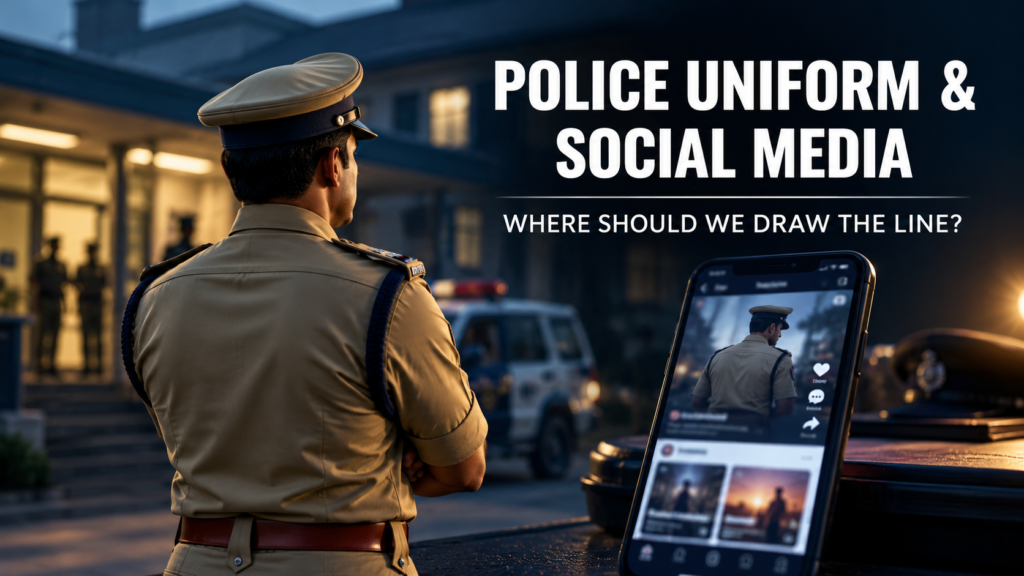
A police uniform is far more than an item of clothing. It represents authority, responsibility, discipline and, above all, public trust. When a police officer appears before the public in uniform, people do not see only the individual officer. They also see the police organisation and, to a significant extent, the authority of the State.
This becomes particularly important in the age of social media. Platforms such as Facebook, Instagram, YouTube and other digital platforms have changed the way people communicate and present themselves to the public. Police personnel are also part of this digital environment. Like others, they may use social media to communicate with friends and family, share photographs, express personal views, create educational material or develop a public presence.
There is nothing inherently wrong with a police officer using social media. The more difficult question arises when an officer creates personal content while wearing the police uniform. That is where professional judgment becomes important.
When Personal Identity Meets Institutional Identity
Every police personnel has a personal identity outside the workplace. police personnel have their own interests, hobbies, opinions, families and social lives. Joining the police service does not mean surrendering every aspect of one’s personal identity. At the same time, professional responsibilities do not disappear simply because an officer is using a personal social-media account. The difficulty arises because the police uniform creates a direct connection between the individual police personnel and the institution.
A person appearing in ordinary clothes and making an entertainment video will generally be understood to be acting as a private individual. The same person appearing in police uniform may be perceived differently. The public may reasonably associate the officer’s words, conduct or opinions with the police organisation itself. This distinction is sometimes overlooked in the rush to create content and attract public attention.
The Purpose and Context of the Content Matter
Not every appearance of a police personnel in police uniform on social media should be viewed in the same manner. There is a clear difference between police personnel recording a public-awareness video about cybercrime and an officer using a police uniform in a personal entertainment reel.
Police personnel explaining how citizens can report cyber fraud, discussing traffic safety, creating awareness about child protection or informing the public about emergency procedures are using professional knowledge for a public purpose. Such communication can help citizens understand police procedures and access public services more effectively.
The situation can be different when the police uniform is used primarily to make personal content more attractive, entertaining or commercially valuable. Therefore, the important question is not simply whether police personnel are wearing a police uniform. The purpose, context and effect of the content also need to be considered.
The Uniform Should Not Become a Social-Media Prop
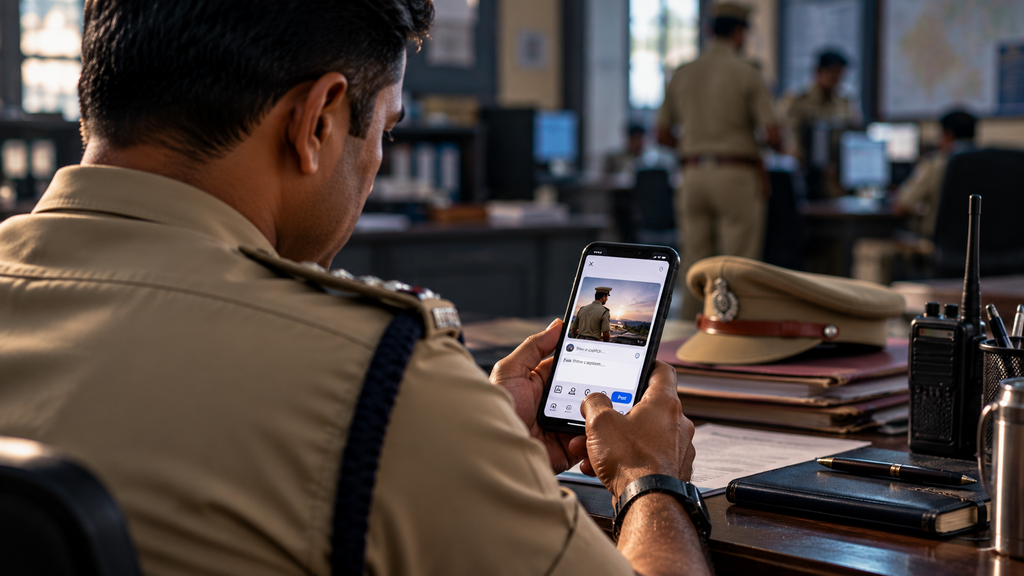
Social media is driven by attention. Content that is unusual, humorous, emotional or visually striking can attract more views and engagement. A police uniform naturally attracts attention because it carries authority and immediately identifies the person as a member of the police service. This can create a temptation to use the police uniform to increase the reach of personal content. That is where professional judgment becomes necessary.
The police uniform should not be reduced to a costume or visual prop for gaining followers, increasing views or making an otherwise ordinary personal video appear more authoritative. This does not mean that every photograph or video taken in police uniform is inappropriate. Police personnel regularly appear in uniform at official functions, community programmes, training activities, public events and other professional engagements.
The concern arises when the police uniform is deliberately used to give personal content an institutional appearance or authority that it would not otherwise possess.
What Does the Public See?
Police personnel may understand that a particular video is personal. The public may not. This is one of the most important considerations in this discussion. Suppose a police officer uploads a video expressing a personal opinion while wearing a police uniform. The officer may intend to communicate, “This is my personal view.” However, many viewers may simply see a police personnel speaking in police uniform. The distinction between the individual and the institution can therefore become blurred.
The same concern may arise when police personnel promote a product, business, coaching programme or other commercial activity while wearing a police uniform. Viewers may perceive the appearance as an endorsement carrying the credibility of the police personnel’s official position. The question then becomes whether the authority associated with the police identity is being used for
Entertainment Content Requires Careful Judgment
Dance videos, comedy reels, motivational videos and other forms of entertainment have become common on social media. Police personnel are naturally part of the same society and are not isolated from these developments. It would be too simplistic to suggest that every police officer must completely avoid entertainment content.
The more appropriate question is whether the content is consistent with professional standards and whether the police uniform is necessary for the activity. A useful test is simple:
If the Police uniform were removed from the video, would the content serve essentially the same purpose?
If the answer is yes, police personnel should consider whether there is a legitimate reason to involve the institutional identity of the police service in what is otherwise a personal activity. This does not mean that every such appearance automatically amounts to misconduct. The applicable service rules, departmental instructions and circumstances of the particular case must always be considered.
Commercial Content Is Particularly Sensitive
The use of a police uniform in commercial content raises additional concerns. Consider a situation in which police personnel appear in a police uniform while promoting a particular product or business. The audience may assume that the police personnel’s professional position gives credibility to that product. If the police personnel receive financial or other personal benefit from the activity, the issue becomes even more sensitive.
Government servants are governed by service conditions and conduct requirements. Depending on the applicable rules and the circumstances, outside employment, commercial activity, endorsements or the use of official position for private benefit may raise disciplinary or ethical concerns. Police personnel should therefore exercise particular caution before using the police uniform, official designation or police identity in connection with commercial activities.
Political Neutrality Requires Particular Care
The issue becomes even more sensitive when social media content has a political character. The police are expected to perform their duties impartially and without partisan influence. Public confidence in police neutrality is an important part of the criminal justice system.
An officer appearing in uniform in political campaigning, political promotion or partisan messaging may create an impression that the police institution itself is associated with that political position. Even when an officer intends the content to be personal, the presence of the uniform may create a different public perception.
Police personnel should therefore exercise particular care when engaging with political content while identifying themselves as police officers.
Freedom of Expression and Service Discipline
There is another side to this discussion that should not be ignored. Police personnel are also individuals and citizens. They do not lose every aspect of their personal identity when they enter government service. Freedom of expression is an important democratic principle.
At the same time, government service carries specific responsibilities. Police personnel are governed by service rules, departmental instructions and standards of professional conduct. These responsibilities exist in part because police officers exercise powers that directly affect the liberty, safety and rights of citizens. The issue, therefore cannot be approached entirely from one side.
It would be incorrect to assume that everything a police personnel posts online automatically amounts to misconduct simply because the person is a police personnel. Equally, it would be incorrect to assume that everything posted from a personal social media account is automatically outside the scope of professional responsibility. Each situation must be examined in light of the applicable rules and the facts and circumstances of the particular case.
The Digital Footprint Cannot Be Ignored
One of the most significant features of social media is its permanence. An officer may upload a video for only a few minutes and later delete it. By that time, however, someone may have downloaded it, taken a screenshot or shared it on another platform. The police personnel may forget about the video. The internet may not.
A post that appears harmless when uploaded can later become controversial when viewed without its original context. Something intended as casual personal content may acquire a completely different meaning once it is circulated widely. Police personnel should therefore think carefully before publishing content while in uniform.
A useful professional test is:
Would I be comfortable if this photograph or video appeared tomorrow before my senior officers, colleagues, family members and the general public?
If the answer is no, it may be worth reconsidering the post before pressing “Publish.”
Social Media Can Also Serve the Police
The answer is not to keep police personnel away from social media. Responsible use of social media can be useful for modern policing. Citizens often have limited knowledge about police procedures, criminal laws and their own legal rights and responsibilities. police personnel can use digital platforms to explain these matters in simple and accessible language.
Police personnel can explain how to report cyber fraud, what information should be preserved after an online scam, how citizens can seek emergency assistance, what precautions should be taken during disasters or how parents can protect children from online exploitation. Such communication can improve public understanding and make the police more accessible to the community.
In these circumstances, the uniform may have a legitimate connection with the message because police personnel are communicating knowledge or information related to public service. The issue, therefore, is not whether police personnel should use social media. The issue is how they use it and in what capacity they present themselves.
There is an important distinction between responsible professional communication and the inappropriate use of institutional identity for personal purposes.
What Should Police Departments Do?
This issue should not be left entirely to individual police personnel. Police departments should consider developing clear and practical social-media guidelines for their personnel. Officers should know what type of content may appropriately be created in uniform, what information must remain confidential, how photographs of police stations and operational locations should be handled, what restrictions may apply to commercial endorsements, how ongoing investigations must be protected and how official and personal social-media accounts should be distinguished. Training is equally important.
Many police personnel entered the police service before social media became such a powerful part of public communication. The digital environment has changed rapidly, and departmental guidance and training should keep pace with that change. Clear and practical guidance can protect both individual police personnel and the police organisation.
The Responsibility of Senior Officers
Senior officers also have an important role to play. Discipline should not mean reacting to every social media post with punishment. At the same time, professional standards cannot be ignored where conduct genuinely affects the dignity, credibility or functioning of the police service. The better approach is to develop a culture of responsible digital behaviour.
Police personnel should understand that wearing the police uniform carries additional responsibility. Senior officers should communicate these expectations clearly and consistently and should ensure that personnel understand both their rights and their professional obligations. The objective should be professional discipline without unnecessary interference in the legitimate personal lives of police personnel.
A Simple Principle for Every Police Officer
Before posting a photograph or video in uniform, a police personnel should pause and ask three simple questions.
First: Why am I wearing the uniform in this content?
If the answer relates to police duty, public awareness, community engagement or another legitimate professional purpose, the reason is clear. If the answer is simply to attract greater attention to personal content, police personnel should reconsider whether the uniform is necessary.
Second: Could a reasonable member of the public believe that this is an official police message or endorsement?
If the answer is yes, greater caution is required.
Third: Does this content maintain the dignity and professional standards expected of a police officer?
These questions are simple, but they can prevent many unnecessary professional and ethical difficulties.
Conclusion
The debate surrounding police personnel and social media is not really about whether police personnel should be allowed to use social media. They already do, and social media can be a useful tool for modern policing and public communication. The real issue is the boundary between personal expression and institutional identity.
Police personnel may have a personal life. Police personnel may use social media. Police personnel may communicate directly with the public. But the police uniform carries a meaning that goes beyond the individual wearing it. When police personnel wear the uniform, the public sees authority, responsibility and the police institution. That is why the uniform should be used with judgment and professional restraint.
The guiding principle can be simple:
Use social media freely, but use the uniform responsibly.
A police uniform represents service, discipline and public trust. It should not become merely another tool for gaining followers, views, commercial attention or personal popularity. In the digital age, professional responsibility does not necessarily end when an officer opens a social media application. The uniform may come off at the end of duty, but the professional identity associated with it does not disappear completely. That is the line every police officer should understand before pressing “Post.”
Disclaimer: This article discusses the ethical and professional aspects of police personnel using social media in uniform. Whether particular conduct amounts to misconduct will depend on the applicable service rules, departmental instructions and the facts and circumstances of each case.