

By Suman Moktan
Dashain is a time of happiness, family reunions, blessings, and celebration. For many people, it is the most beautiful time of the year. Families come together, elders put tika on the foreheads of younger family members, relatives exchange greetings, and friends share photographs of their joyful moments. But for a police officer, festivals often tell a different story.
The Happiness I Watched Through a Screen
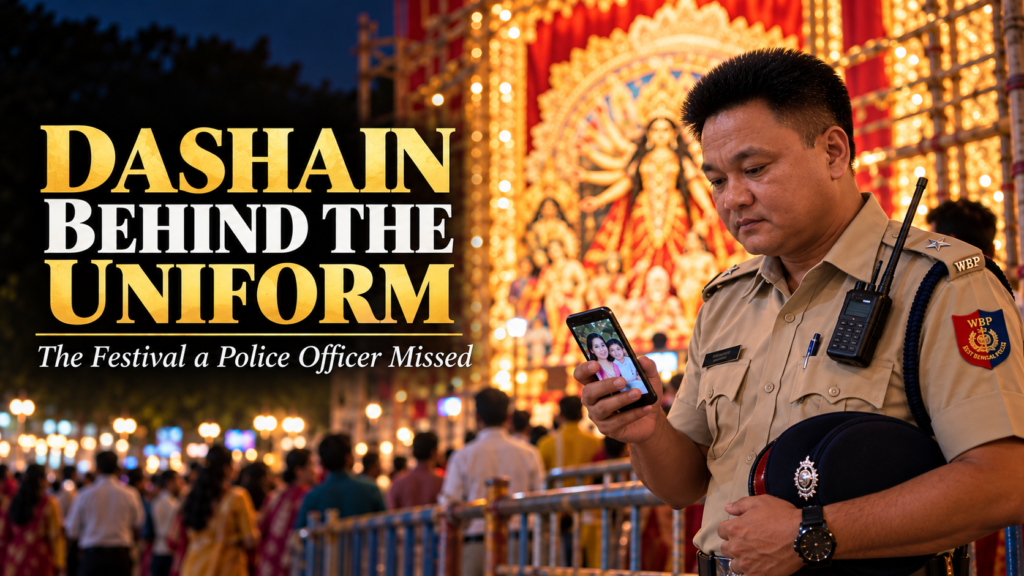
During Dashain, I saw many photographs on Facebook and WhatsApp. My friends were smiling with their families. Relatives were gathered around their elders, receiving tika and blessings. Some were travelling to their villages, while others were enjoying good food and happy moments with loved ones. Every photograph carried a story of happiness. I looked at those pictures with a smile, but somewhere inside me, I felt a little sadness too.
I wished I could also sit with my family, receive blessings from my elders, enjoy a meal together, and spend a few peaceful hours with the people I love. I wanted to celebrate Dashain without looking at the clock, checking a duty roster, or thinking about the next responsibility. But I was wearing the uniform, and I had a duty to perform.
While others were preparing for the festival, we were preparing for security arrangements. While families were gathering around their homes, police personnel were deployed on the streets, near pandals, at crowded places, and wherever our presence was needed. For us, the festival meant long hours of duty, constant alertness, and responsibility.
When Duty Comes Before Personal Happiness
People often see the police during festivals. They see us managing crowds, controlling traffic, maintaining law and order, and ensuring that celebrations take place peacefully. What they may not see is the person behind the uniform.
Behind every police officer is a son, a husband, a father, a brother, or a friend. We also have families waiting for us. Our children also want to spend time with us. Our wives and parents also hope that we will be home during special occasions. Sometimes, a simple phone call is all we can manage.
“Are you coming home today?”
That question may sound ordinary, but when you are on festival duty, answering it is not always easy. You may want to say yes, but duty does not always allow you to keep that promise. You explain that you are busy. You say that you will try to come later. You hope that the situation will improve and that you might get a little time for your family. Sometimes, that moment never comes. And so, another festival passes.
The Uniform Has Its Own Sacrifices
Police duty is not limited to ordinary working hours. Law and order do not stop for festivals, holidays, or family celebrations. During Durga Puja and Dashain, the responsibility becomes even greater. Large gatherings, religious processions, traffic movement, and public celebrations require careful planning and constant vigilance. A small mistake can create a serious problem. Every officer must remain alert, patient, and ready to respond.
There is satisfaction in knowing that people are celebrating safely because we are doing our duty. When a procession passes peacefully, when a crowd returns home safely, and when the festival ends without a major incident, we feel that our efforts have served a purpose. Yet, even with that satisfaction, we remain human.
We also feel tired. We also miss our families. We also wish to be part of the celebrations we help protect. Being a police officer does not mean we stop having feelings. It means we sometimes put those feelings aside to fulfil our responsibilities.
A Festival for Everyone, but Not Always for Us
When I look at photographs of friends celebrating Dashain, I do not feel jealous. I feel happy for them. They deserve those moments with their families. But those pictures also remind me of the moments I missed.
The tika I could not receive at the usual time. The family meal I could not share. The conversations I could not join. The simple happiness of sitting at home without worrying about duty. These may seem like small things, but sometimes the smallest moments are the ones we miss the most.
A police officer may stand among hundreds of celebrating people and still feel far away from his own family. He may help others reach home safely while knowing that his own family is waiting for him. That is one of the quiet realities of police life.
There is no complaint in this feeling, only a simple truth. Public service often asks us to sacrifice personal comfort, and festivals make that sacrifice more visible.
To the Families Who Wait for Us
Today, I also think about the families of police personnel. They understand that our duty can change our plans without warning. They learn to celebrate with an incomplete family gathering. They wait for our calls, adjust their schedules, and sometimes hide their disappointment because they know that we cannot always choose when to come home. Their sacrifice is often silent.
A police officer may be standing on the road, but the strength to continue often comes from the family waiting at home. To every wife, husband, parent, and child who spent Dashain waiting for a police officer, your patience and understanding deserve recognition too. You are also part of the service, even if you never wear the uniform.
When the Festival Ends
One day, the lights will come down, the crowds will disappear, and the roads will return to their normal routine. The duty roster will change, and police personnel will finally get some time to rest. Perhaps then we will sit with our families, share a meal, and exchange the greetings we could not share on the actual day. The celebration may be delayed, but the love remains.
And when I look back at this Dashain, I will remember both sides of the festival: the happiness of the people who celebrated and the quiet sacrifice of those who helped keep them safe. Because behind every peaceful festival, there are people working while others celebrate.
Some wear uniforms. Some work in hospitals, fire services, emergency response teams, and other essential services. Their absence from family photographs does not mean they have forgotten their loved ones. Sometimes, it simply means they are busy taking care of someone else’s safety.
A Final Thought
This Dashain, I could not celebrate the way many of my friends and relatives did. I watched their photographs and wished I could have been there with them. But I also know that my duty had a purpose. Perhaps I missed some personal moments, but I fulfilled a responsibility that mattered to the people around me. I am proud of the service, even when the sacrifice feels heavy.
The uniform may keep us away from home, but it never takes away our longing to return. And perhaps that is the real story of a police officer during a festival: a heart that wants to celebrate with family, and a duty that asks him to stand guard until everyone else can celebrate safely. This is the story behind many unseen festival photographs. A story of duty, distance, family, and the human heart beneath the uniform.