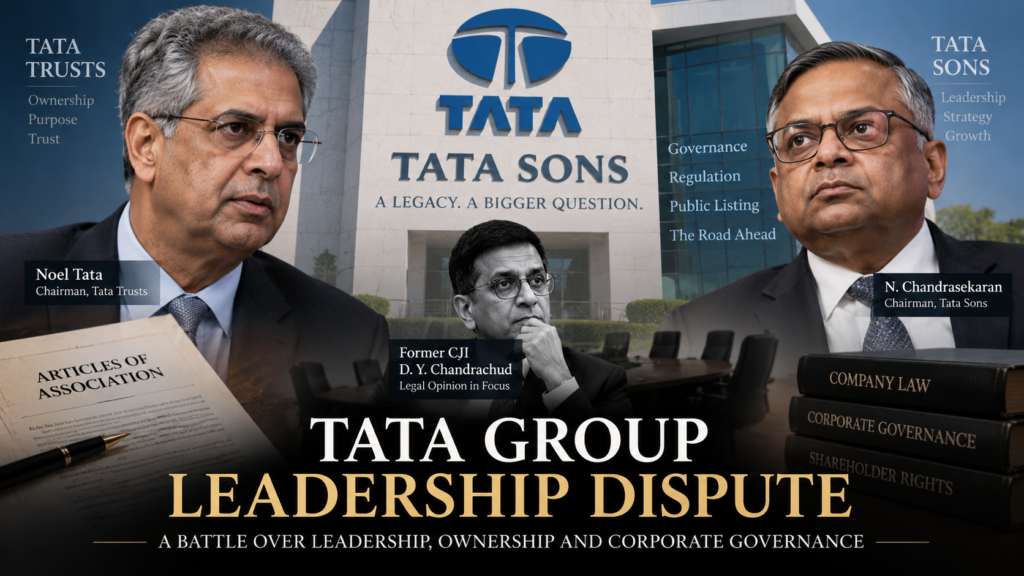

The disagreement over N. Chandrasekaran’s reappointment has exposed competing interpretations of Tata Sons’ Articles of Association and raised questions about the balance of power between its board and Tata Trusts.
When a Leadership Decision Becomes a Corporate Governance Crisis
A leadership decision at one of India’s most prominent business groups has developed into a dispute over corporate authority. On September 17, 2026, Tata Sons’ board approved the reappointment of N. Chandrasekaran as chairman for another five years. The decision was immediately challenged by Tata Trusts, whose chairman, Noel Tata, described the resolution as legally invalid.
What makes the disagreement significant is the structure of Tata Sons itself. Tata Trusts owns approximately 66% of the holding company, while its board is responsible for managing the company’s affairs within the framework of applicable law and its Articles of Association. The dispute now centres on how those powers should operate when the board and a major shareholder disagree.
The controversy has also brought former Chief Justice of India D. Y. Chandrachud into the discussion. A legal opinion obtained by Tata Trusts reportedly supports Noel Tata’s interpretation of the company’s governance provisions. At the same time, the board’s position and the Trusts’ position differ on the sequence of events that led to the reappointment.
Understanding this dispute requires more than identifying who voted for or against the resolution. It requires examining the company’s ownership structure, the events leading to the board meeting, the disputed voting procedure, and the legal questions that could shape what happens next.
The Company at the Centre of the Dispute
Tata Sons is the principal holding company of the Tata Group. Its position within the group makes its leadership important to businesses operating in sectors such as information technology, automobiles, steel, and aviation. The ownership structure adds another dimension to the story. Tata Trusts holds approximately two-thirds of Tata Sons, giving it a substantial shareholder interest. However, the company is managed through its board of directors, whose powers and responsibilities are governed by company law and the Articles of Association.
This distinction between ownership and management is at the heart of the current disagreement. Tata Trusts has a major financial and institutional interest in Tata Sons, while the board is responsible for making corporate decisions through the procedures applicable to the company. When these two centres of authority disagree, the question is not simply who owns more shares. The question is how the company’s governing arrangements allocate decision-making powers and what happens when those arrangements are contested. That question became particularly important after Chandrasekaran’s position on his future tenure changed.
From Succession Planning to a Leadership Dispute
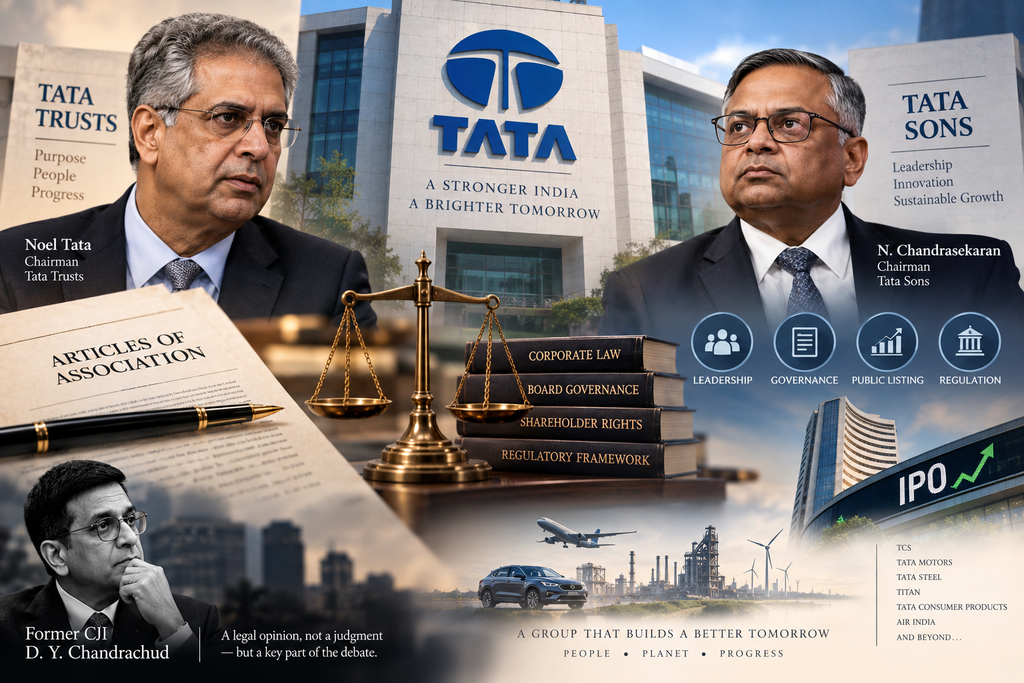
N. Chandrasekaran has served as chairman of Tata Sons since 2017. In August 2026, he reportedly informed the board that he did not intend to offer himself for reappointment when his existing term ended on February 20, 2027. According to Tata Trusts, the decision was freely made and clearly communicated. The Trusts said it accepted Chandrasekaran’s decision and advised Tata Sons to begin the process of selecting a successor in accordance with the Articles of Association.
The board subsequently took a different course. Reports indicate that its Nomination and Remuneration Committee asked Chandrasekaran to reconsider his decision. He later agreed to do so, and the board considered a fresh five-year term. On September 17, the board approved his reappointment. The decision was supported by four directors, while Noel Tata voted against it. The voting process and the effect of the chairman’s casting vote have since become central to the legal disagreement.
For Tata Trusts, the issue was not simply that Chandrasekaran had changed his position. It was that the reappointment process, in its view, could not lawfully proceed without the required support from the Trusts’ nominee directors. The board’s reported decision therefore triggered a dispute over whether the company’s internal rules had been followed.
Why Tata Trusts Called the Resolution Invalid
Following the board meeting, Tata Trusts publicly maintained that the reappointment resolution was a “legal nullity.” This is a legal position advanced by the Trusts, rather than an established judicial finding. The Trusts’ argument rests on their interpretation of the Articles of Association. They maintain that the chairman’s appointment or reappointment requires the support of a majority of Tata Trusts’ nominee directors. There are two relevant nominees in the reported dispute. Noel Tata opposed the reappointment, while Venu Srinivasan supported it. The Trusts argue that the required affirmative support was therefore absent.
The disagreement becomes more complicated because reports indicate that the board’s decision relied on a casting vote after the two nominee directors took different positions. Tata Trusts maintains that a casting vote cannot replace the affirmative support required under the Articles. The legal question is consequently about the relationship between the company’s ordinary board voting arrangements and the special rights that Tata Trusts says its nominees possess.
Whether that interpretation is correct must be assessed against the actual Articles of Association and the applicable law. A board majority does not, by itself, resolve a question about whether a particular decision was subject to additional requirements.
The Legal Opinion of Former CJI D. Y. Chandrachud
The involvement of former Chief Justice of India D. Y. Chandrachud has brought additional attention to the dispute. According to Tata Trusts and media reports, Noel Tata placed a legal opinion from Chandrachud before the Tata Sons board. The opinion reportedly supports the Trusts’ position that the affirmative support of the nominee directors is required and that a casting vote cannot substitute for that support. The opinion is relevant because it addresses the legal foundation of the Trusts’ objection. It is not, however, a court judgment.
A legal opinion provides an interpretation of legal questions. Its persuasive value may be significant, but it does not automatically settle a dispute or invalidate a corporate resolution. That distinction is particularly important in the Tata Sons case. The Trusts have relied on the opinion to support their position, while the board’s decision and the applicable legal framework remain matters that could be contested through formal proceedings.
The ultimate question is whether the reappointment complied with Tata Sons’ Articles of Association and the law governing the company. A final determination would depend on the appropriate legal process, not simply on the identity of the person who provided the opinion.
The IPO Dispute: Another Point of Conflict
The leadership disagreement is unfolding alongside a separate issue concerning Tata Sons’ possible public listing. The Reserve Bank of India regulates certain categories of non-banking financial companies, including upper-layer NBFCs. Tata Sons has faced regulatory requirements connected to its classification and registration. Reports indicate that the board has agreed to move ahead with the listing of Tata Sons, while Tata Trusts has opposed the move. The listing question is important because it concerns the future structure of the holding company and the way its ownership and governance arrangements may evolve.
An IPO would involve offering shares to public investors and listing the company on a stock exchange. It is important to distinguish a decision to proceed with listing-related steps from the completion of an actual public offering. The issue also involves different shareholder interests. Tata Trusts has raised concerns about the implications of listing, while the Shapoorji Pallonji Group, a significant minority shareholder, has reportedly supported the move.
The listing question and the leadership dispute are connected through the wider governance structure of Tata Sons, but they remain distinct corporate and regulatory matters. Each requires examination of the relevant legal requirements and formal decisions.
The Importance of the Articles of Association
The dispute illustrates why a company’s Articles of Association can become important when its shareholders and directors disagree. In a straightforward board decision, a majority vote may determine the outcome. But a company’s governing documents may provide special rights or approval requirements for particular decisions.
The question in Tata Sons is whether the appointment or reappointment of the chairman falls within such a requirement and, if so, how it should be applied. This is a matter of legal interpretation. It requires attention to the exact wording of the Articles, the relevant corporate law, and the circumstances in which the board passed its resolution.
The disagreement also demonstrates that majority ownership and board authority are related but different concepts. Tata Trusts’ shareholding gives it substantial influence, while the board’s powers must be exercised within the legal framework applicable to Tata Sons. The dispute is therefore an example of how corporate governance arrangements can become contested when different institutional interests take opposing positions.
The Cyrus Mistry Case: A Relevant Historical Comparison
The present controversy has drawn comparisons with the leadership dispute involving Cyrus Mistry in 2016. Mistry was removed as chairman of Tata Sons, and the dispute eventually reached the Supreme Court. In 2021, the Court upheld Tata Sons’ decision to remove him. That earlier case provides context for understanding the importance of board authority, shareholder rights, and governance arrangements within Tata Sons.
However, the two situations should not be treated as identical. The facts and legal questions are different, and the outcome of the Mistry case does not automatically determine the validity of Chandrasekaran’s reappointment. The comparison is useful as historical background, but the current dispute must be assessed through its own governing documents and legal circumstances.
What Happens Next?
The next stage will depend on the formal actions taken by Tata Trusts, Tata Sons, and any relevant legal or regulatory authorities. Tata Trusts is reportedly evaluating legal options, including a possible approach to the National Company Law Tribunal. A possible legal action, however, should not be confused with a confirmed filing or a final decision. The reappointment also faces the shareholder approval process at the Annual General Meeting. Tata Trusts’ substantial shareholding makes that process important, although the exact outcome will depend on the resolutions and applicable voting requirements.
The central questions remain whether the reappointment was approved in accordance with the Articles of Association, what effect the disputed voting procedure has, and how the company will address the continuing disagreement between its board and its major shareholder.These questions cannot be conclusively answered through media reports alone. The actual corporate documents, formal resolutions, legal submissions, and any subsequent judicial or regulatory decisions will be important.
Conclusion: A Test of Corporate Governance
The Tata Sons leadership dispute has brought questions of corporate governance into public view. At its centre is a disagreement over the reappointment of N. Chandrasekaran and the interpretation of the company’s Articles of Association. The reported legal opinion of former CJI D. Y. Chandrachud has added weight to Tata Trusts’ objection, but it does not itself constitute a binding court judgment.
The dispute also involves the proposed listing of Tata Sons, making the company’s ownership structure and regulatory obligations part of the wider discussion. The outcome will depend on the applicable law, the interpretation of the governing documents, and the formal decisions taken through the appropriate corporate and legal processes. For students of company law, the controversy provides an opportunity to examine the relationship between shareholders, directors, and corporate governance in a major business organisation.
The final question is not simply who controls Tata Sons. It is how that control is exercised under the rules that govern the company.
Disclaimer: This article is intended for educational and informational purposes. The dispute is ongoing, and legal positions and corporate decisions may change. Readers should consult official documents and qualified legal professionals for advice concerning specific legal issues.